Every Montessori lesson, explained for homeschool parents
Look up a lesson by area or age and get the aim, the materials, the presentation step by step, how the child sees their own mistake, what comes next, and whether to make the material or buy it.
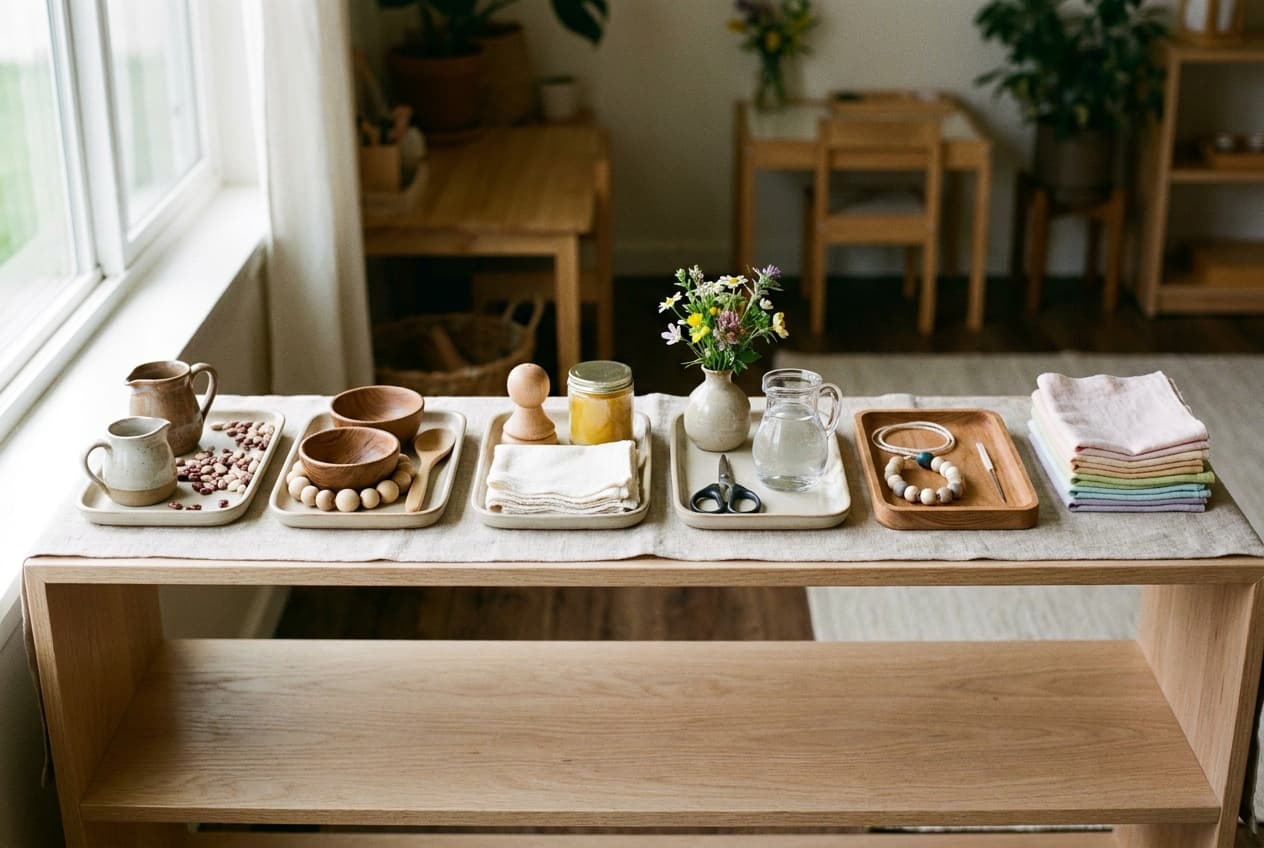
The sequence, area by area
All lessons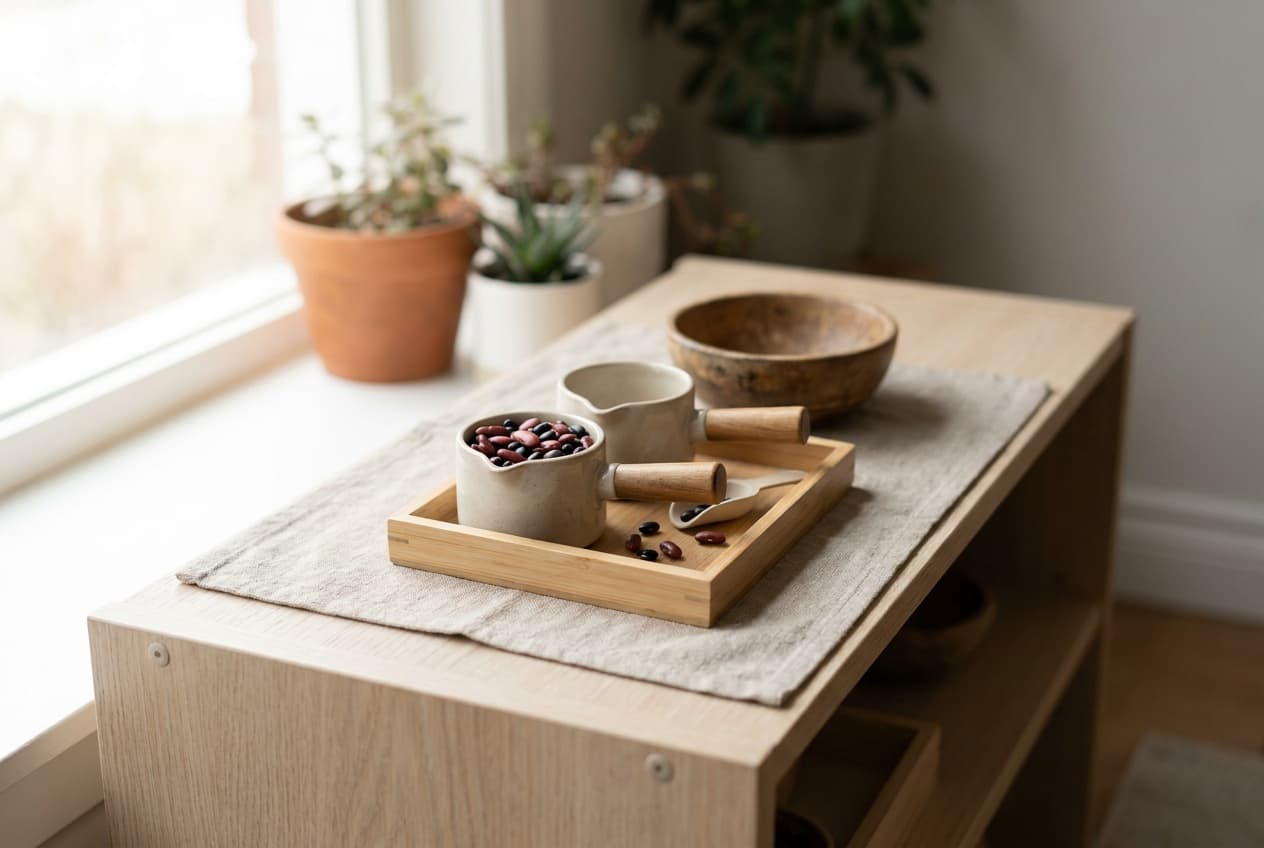
Practical Life
Everyday care of self and environment: pouring, spooning, washing, dressing.
- 1Hand Washing15 months to 3.5 years
- 2Dry Pouring Between Two Pitchers18 months to 3.5 years
- 3Spooning: Transferring with a Spoon18 months to 3.5 years
- 4Wet Pouring Between Two Pitchers2 to 4 years
- 5Grace and Courtesy Lessons2 to 6 years
- 6Button Dressing Frame2.5 to 4.5 years
- 7Sweeping with a Brush and Dustpan2.5 to 5 years
- 8Folding Cloths2.5 to 5 years
- 9Banana Slicing (First Food Preparation)2.5 to 5 years
- 10Table Scrubbing3 to 5.5 years
- 11Flower Arranging3 to 5.5 years
- 12Metal Polishing3.5 to 6 years
Sensorial
Materials that isolate one quality (size, length, color, sound) so the child can compare and order it.
- 1Knobbed Cylinders2 to 4 years
- 2Pink Tower2.5 to 4 years
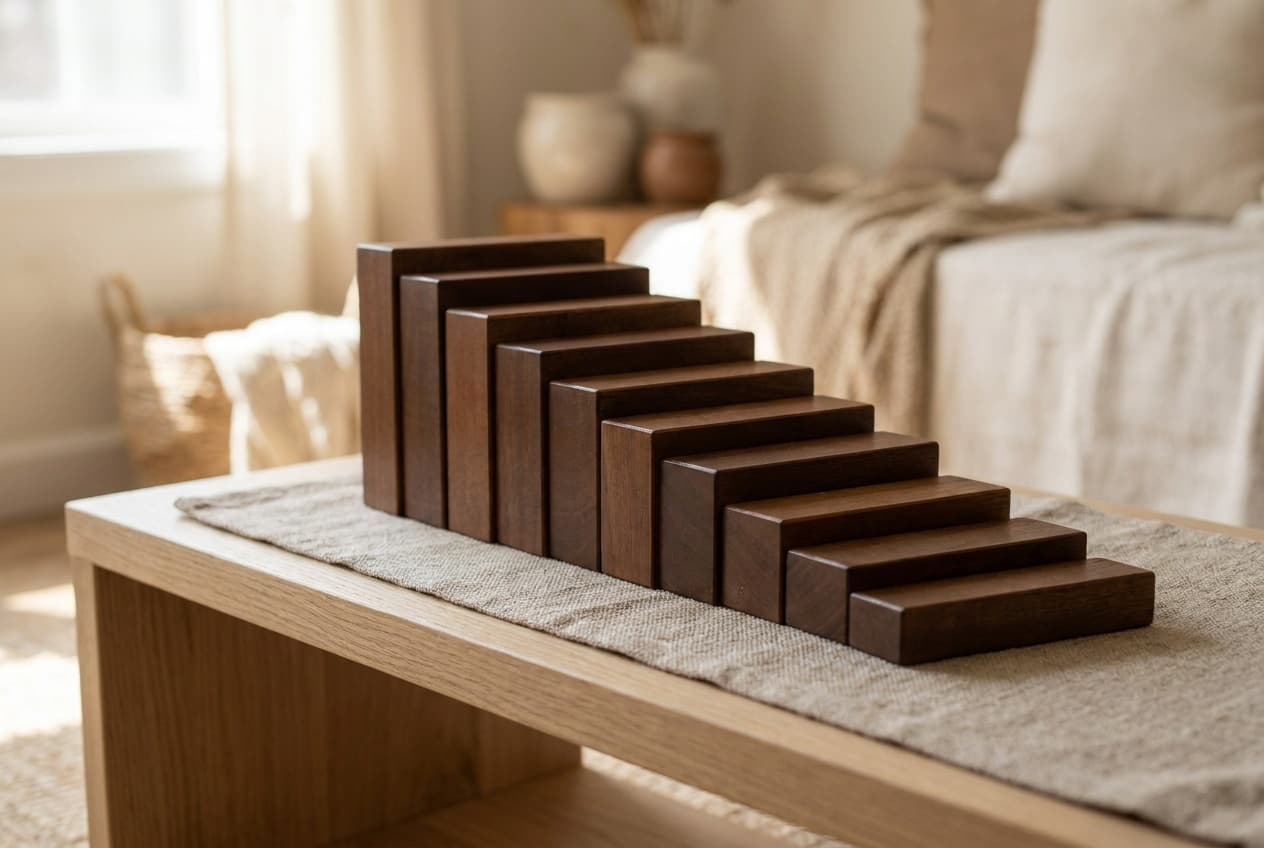
- 3Brown Stair (Broad Stair)2.5 to 4.5 years
- 4Touch Boards (Rough and Smooth Boards)2.5 to 4.5 years
- 5Red Rods (Long Rods)3 to 5 years
- 6Color Tablets: Boxes 1, 2 and 33 to 5 years
- 7Sound Cylinders (Sound Boxes)3 to 5 years
- 8Geometric Cabinet (Plane Geometric Insets)3 to 5 years
- 9Mystery Bag (Stereognostic Bag)3 to 5.5 years
- 10Binomial Cube3.5 to 6 years
- 11Geometric Solids3.5 to 6 years
- 12Trinomial Cube4 to 6 years
Math
Concrete quantity first, then symbols: number rods, golden beads, stamp game.
- 1Number Rods3.5 to 5 years
- 2Sandpaper Numerals3.5 to 5 years
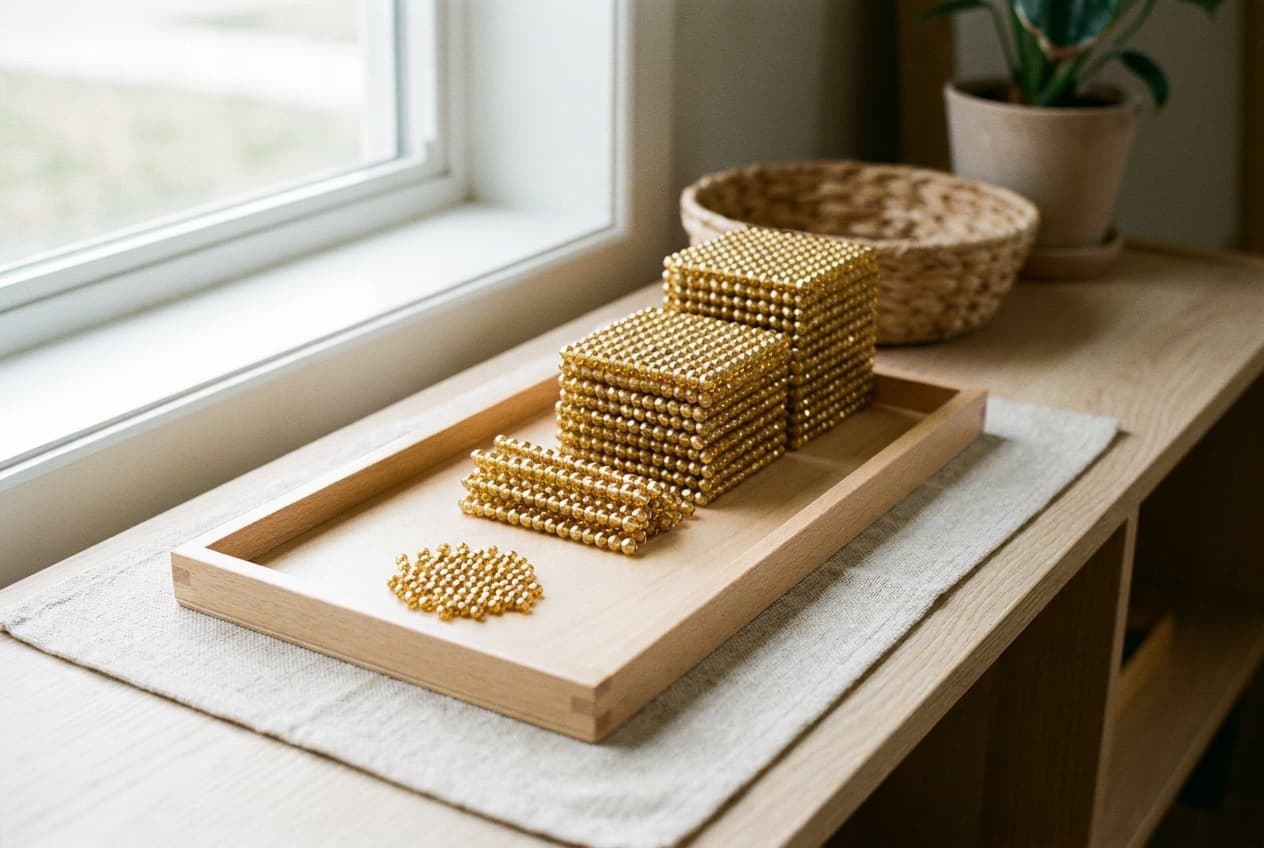
- 3Golden Beads: Introduction to the Decimal System4 to 5.5 years
- 4Spindle Boxes: Counting 0 to 94 to 5.5 years
- 5Teen Boards (Seguin Board A)4 to 6 years
- 6Cards and Counters: Odd and Even4 to 5.5 years
- 7Stamp Game: Static Addition4.5 to 7.5 years
- 8Short Bead Chains (Squaring Chains)4.5 to 6.5 years
- 9Tens Boards (Seguin Board B)4.5 to 6.5 years
- 10Fraction Insets (Fraction Circles)4.5 to 7 years
- 11Hundred Board5 to 7 years
- 12Addition Strip Board5 to 7.5 years
Language
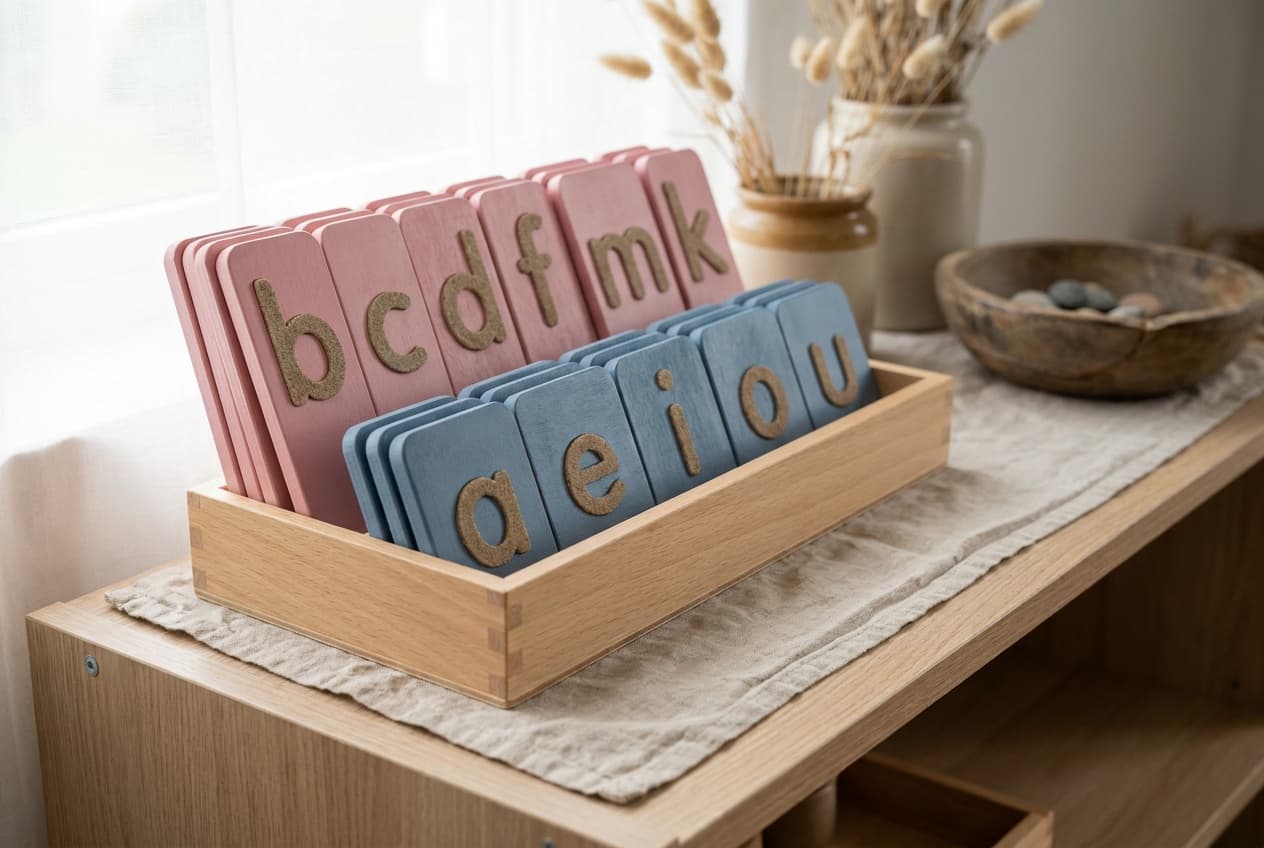
Sounds before letter names, writing before reading: sandpaper letters, moveable alphabet, pink series.
- 1Sandpaper Letters2.5 to 5 years
- 2Sound Games (I Spy)2.5 to 4.5 years
- 3Moveable Alphabet: Building First Words3.5 to 6 years
- 4Metal Insets3.5 to 6 years
- 5Pink Series: Object Box Reading4 to 6 years
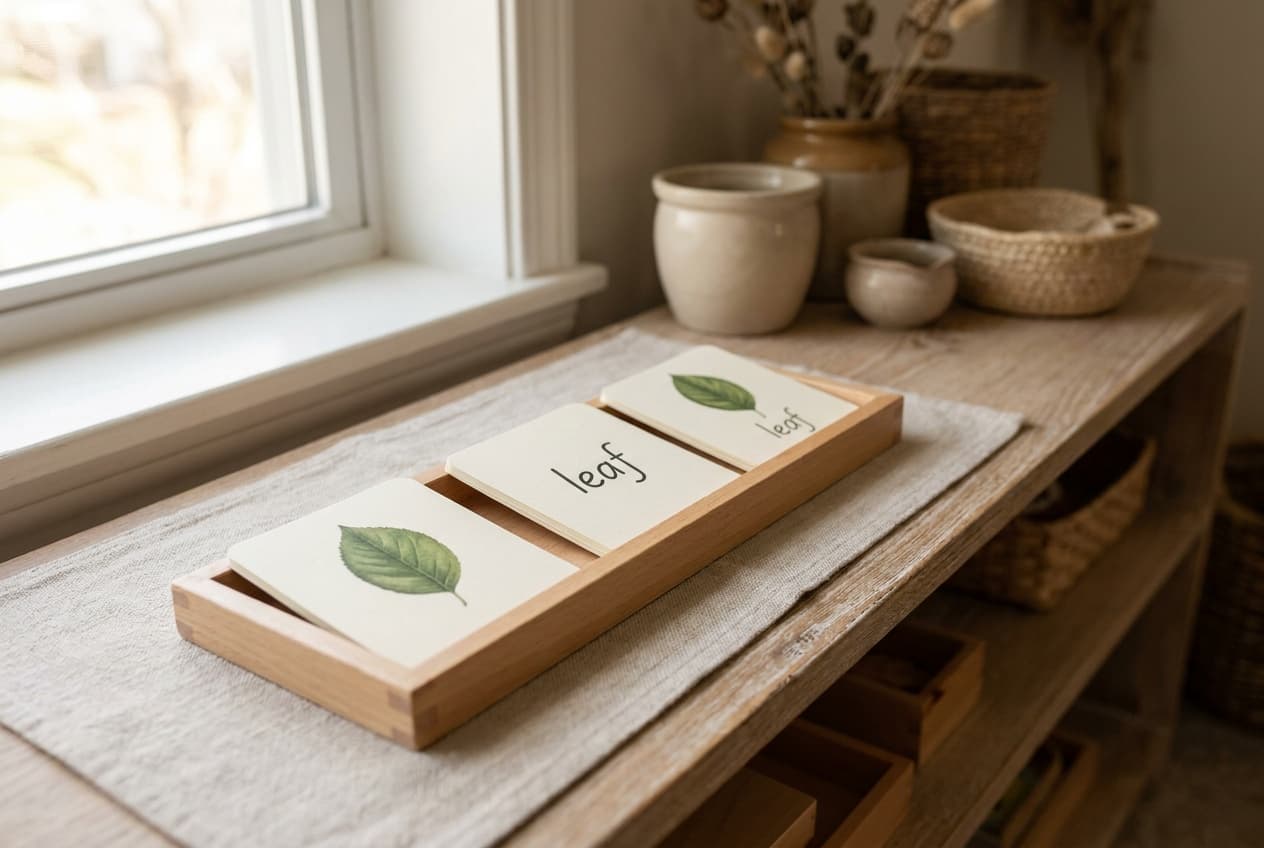
- 6Three-Part Cards: Land and Water Forms4 to 6.5 years
- 7Blue Series: Words with Consonant Blends4.5 to 7 years
- 8Grammar Symbols: The Noun and the Verb4.5 to 7 years
- 9Puzzle Words (Sight Words)4.5 to 7 years
- 10Green Series: Phonograms5 to 7.5 years
- 11Command Cards (Reading of Commands)5 to 7.5 years
- 12Grammar Boxes and Grammar Box Cards5.5 to 9 years
Cultural
Geography, science and the wider world: globes, puzzle maps, land and water forms.
- 1Sandpaper Globe: Land and Water2.5 to 4.5 years
- 2Caring for Plants2.5 to 5.5 years
- 3World Puzzle Map: Continents3 to 5.5 years
- 4Land and Water Forms3 to 5.5 years
- 5Continent Globe (Painted Globe)3 to 5 years
- 6Sink and Float3 to 5.5 years
- 7Living and Nonliving: A First Sort3.5 to 6 years
- 8Botany Cabinet: Leaf Shapes3.5 to 6 years
- 9Flags of the World3.5 to 6 years
- 10Parts of a Plant (Botany Puzzles)3.5 to 6 years
- 11Zoology Puzzles (Parts of an Animal)3.5 to 6 years
- 12The Sun and the Planets (Solar System)4 to 6 years
Lessons are listed from the youngest typical starting age.
What to offer at each age
All agesIllustration Illustration 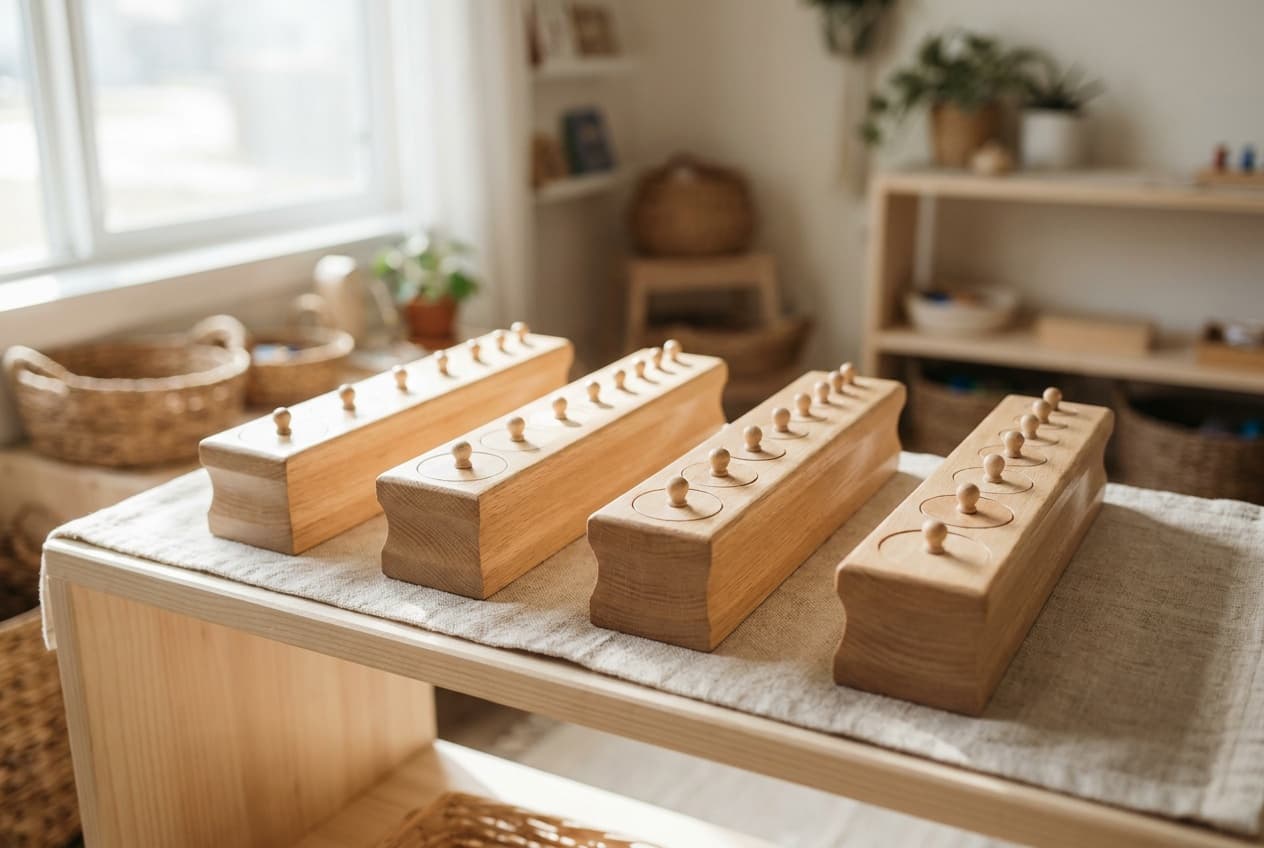
Illustration Illustration Illustration 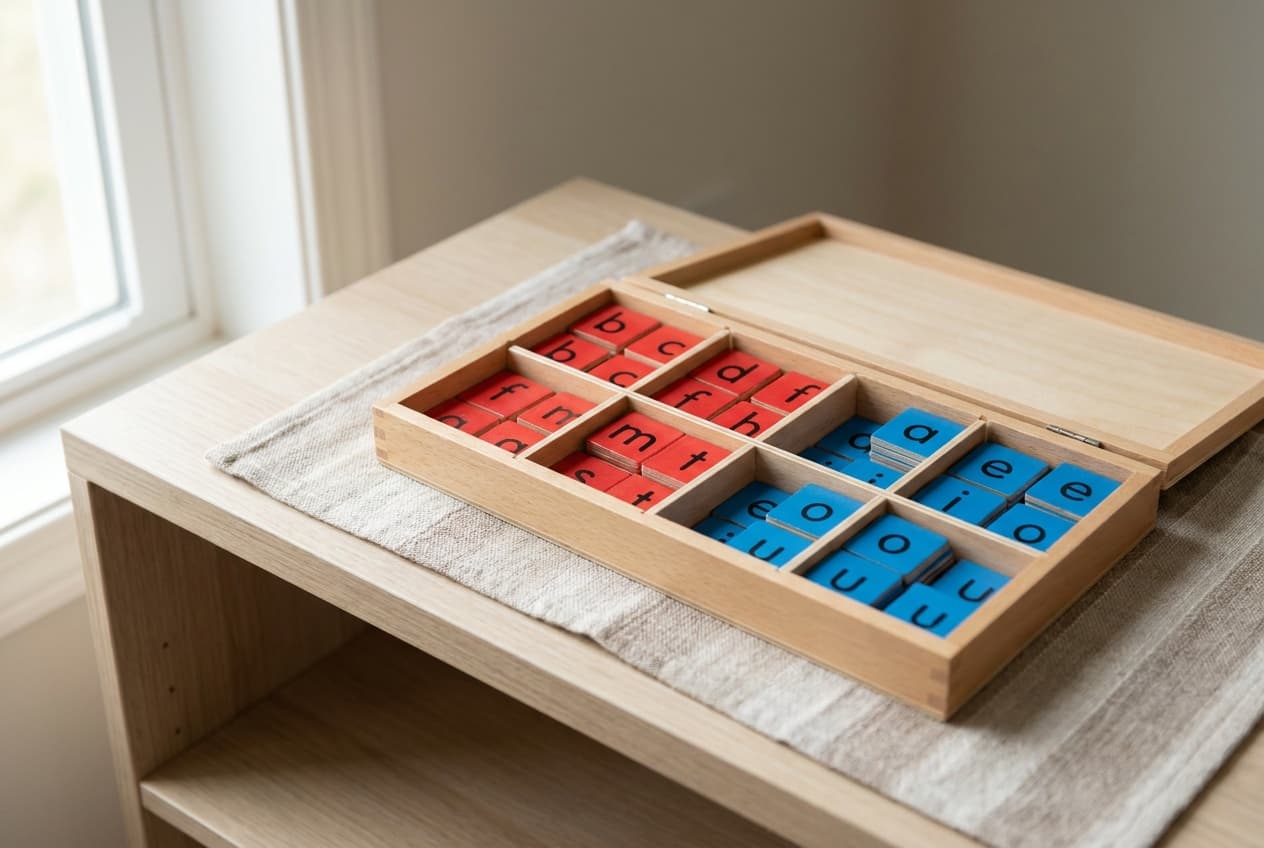
Illustration 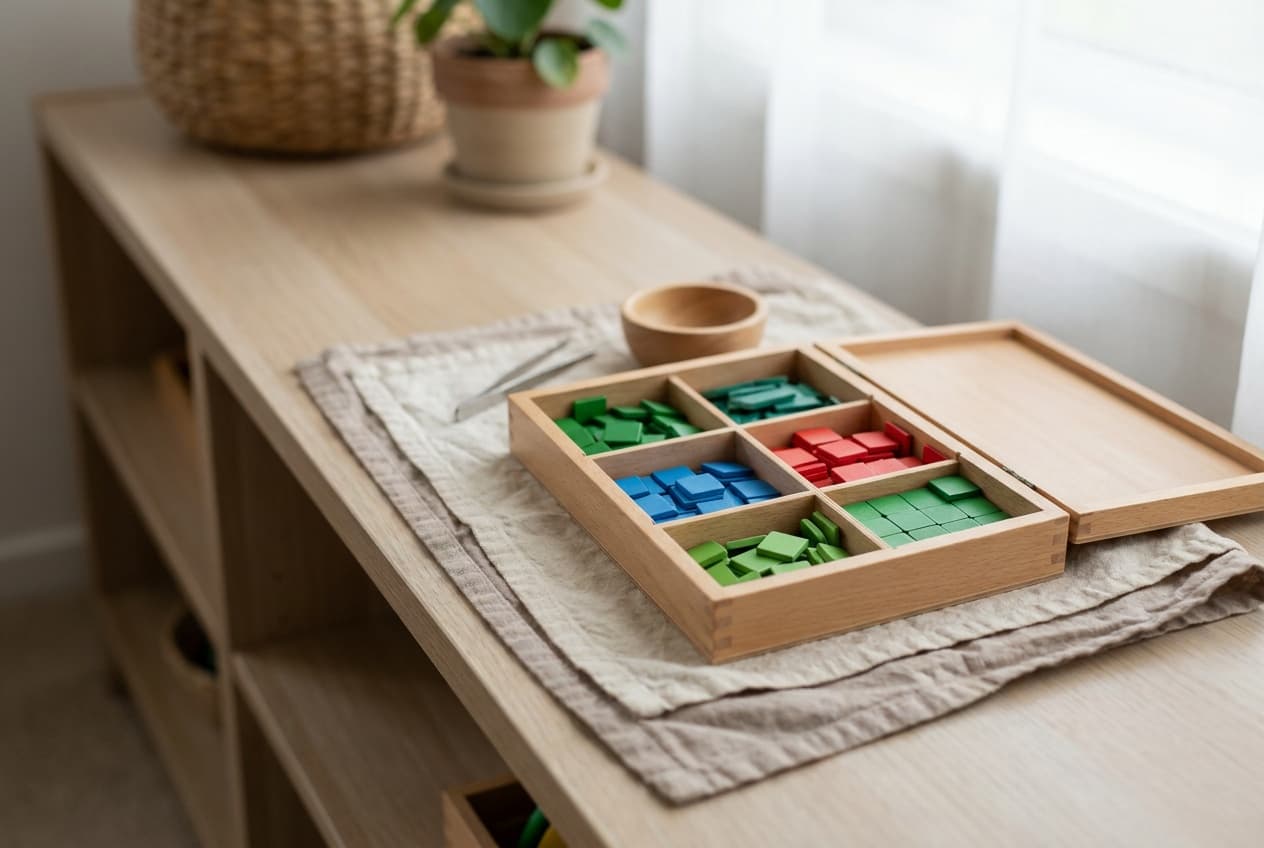
Illustration
How this reference is made
Every lesson cites its sources, starting with Montessori's own books. Nothing is behind a login or an email form.
No lesson here has been presented at home yet, and each page says so in plain words. No credentialed guide has reviewed these pages yet either, so the “Reviewed by” line on every lesson stays empty until one does.
How pages are written explains the sources and the illustrations.
The quickest way to judge it is to read the sequence itself: all 60 lessons, area by area.